Biographies and Memoirs
- You are here:
- HOME
- Books Management
- Biographies and Memoirs

Do the accounts of extraordinary peoples' lives inspire your own life? Can the fortitude of individuals drive how you live your own life? Our authors in the Biographies and Memoirs genre bring you the stories of people who have survived and grown through the most difficult of situations. Their stories will move you to tears, to action, and to new levels in your own life. They will always do this for you on eBookHounds for free or for a discount.
Definition of the "Biographies and Memoirs Genre": Ebooks in both the Biographies and Memoirs genres focus on the life experiences of a single person. Biographies are generally broader in the subject matters of a person's life experiences, while memoirs are more honed into the memories of that person. However, there is very little difference between the two categories, which is why they are combined in a single genre. Ebooks in the Biographies and Memoirs genre also typically have a significant element of inspiration, as the stories which drove the writing of these ebooks are tremendously moving.
Examples of bestselling ebooks in the Biographies and Memoirs genre are Cheryl Strayed (Wild), Chris Kyle (American Sniper), Laura Hillenbrand (Unbroken), and Donna Mabry (Maude).
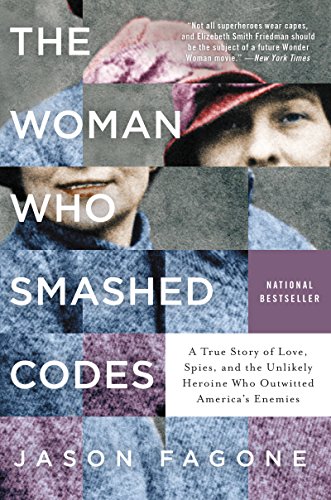
NATIONAL BESTSELLER
NPR Best Book of 2017
“Not all superheroes wear capes, and Elizebeth Smith Friedman should be the subject of a future Wonder Woman movie.” — The New York Times
Joining the ranks of Hidden Figures and In the Garden of Beasts, the incredible true story of the greatest codebreaking duo that ever lived, an American woman and her husband who invented the modern science of cryptology together and used it to confront the evils of their time, solving puzzles that unmasked Nazi spies and helped win World War II.
In 1916, at the height of World War I, brilliant Shakespeare expert Elizebeth Smith went to work for an eccentric tycoon on his estate outside Chicago. The tycoon had close ties to the U.S. government, and he soon asked Elizebeth to apply her language skills to an exciting new venture: code-breaking. There she met the man who would become her husband, groundbreaking cryptologist William Friedman. Though she and Friedman are in many ways the "Adam and Eve" of the NSA, Elizebeth’s story, incredibly, has never been told.
In The Woman Who Smashed Codes, Jason Fagone chronicles the life of this extraordinary woman, who played an integral role in our nation’s history for forty years. After World War I, Smith used her talents to catch gangsters and smugglers during Prohibition, then accepted a covert mission to discover and expose Nazi spy rings that were spreading like wildfire across South America, advancing ever closer to the United States. As World War II raged, Elizebeth fought a highly classified battle of wits against Hitler’s Reich, cracking multiple versions of the Enigma machine used by German spies. Meanwhile, inside an Army vault in Washington, William worked furiously to break Purple, the Japanese version of Enigma—and eventually succeeded, at a terrible cost to his personal life.
Fagone unveils America’s code-breaking history through the prism of Smith’s life, bringing into focus the unforgettable events and colorful personalities that would help shape modern intelligence. Blending the lively pace and compelling detail that are the hallmarks of Erik Larson’s bestsellers with the atmosphere and intensity of The Imitation Game, The Woman Who Smashed Codes is page-turning popular history at its finest.

An extraordinary memoir of one woman’s fight to find her true self between the life into which she was born and the one she was given.
Christiana Mara Coelho was born into extreme poverty in Brazil. After spending the first seven years of her life with her loving mother in the forest caves outside São Paulo and then on the city streets, where they begged for food, she and her younger brother were suddenly put up for adoption. When one door closed on the only life Christiana had ever known and on the woman who protected her with all her heart, a new one opened.
As Christina Rickardsson, she’s raised by caring adoptive parents in Sweden, far from the despairing favelas of her childhood. Accomplished and outwardly “normal,” Christina is also filled with rage over what she’s lost and having to adapt to a new reality while struggling with the traumas of her youth. When her world falls apart again as an adult, Christina returns to Brazil to finally confront her past and unlock the truth of what really happened to Christiana Mara Coelho.
A memoir of two selves, Never Stop Walking is the moving story of the profound love between families and one woman’s journey from grief and loss to survival and self-discovery.
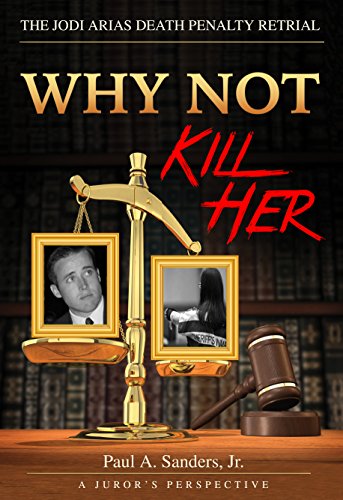
On June 4, 2008, at approximately 5:30 PM in a quiet suburb of Phoenix, Arizona, Jodi Arias stabbed Travis Alexander twenty-nine times, cut his throat and then shot him in the head. The killer then went to great lengths to cover up the crime, including sending his grandmother flowers, going to the memorial service, driving by the victim’s house and calling the lead investigator, Detective Esteban Flores.
It would take five years before the case would be put in front of a second jury and leave them to decide whether Arias was a cold, calculating killer or the victim of extreme domestic violence at the hands of an abusive boyfriend?
Paul Sanders sat in the public gallery for each and every one of the 47 days of the trial, and took extensive notes, transposing every twist and turn of it to social media every night. With allegations of pornography, racial slurs and a search for the answer to the question of domestic violence and alleged child abuse, the journey is both painful and meticulous.
Humbling, intimidating and powerful at the same time, this trial would test the jurors in ways they could never have foreseen, in their ultimate search for truth and justice.
On Pre-Sale Now! The stunning sequel to Paul Sanders first book, 'Brain Damage: A Juror's Tale':
'Secret Life of a Juror: Voir Dire - The Domestic Violence Query' (March 26, 2018)
Amazon Reviews:
“Having sat on this very jury, I can attest to the accuracy and attention to detail of “Why Not Kill Her.” Two thumbs up!” Haaken-Liknes, Jury Foreman of the Jodi Arias Death Penalty Retrial.
"Why Not Kill Her" is a gripping true crime story from the eyes of a former death penalty juror with a heart and soul that seeks truth and justice."
"Move over Ann Rule and Shanna Hogan and make way for America's newest true crime writer!"
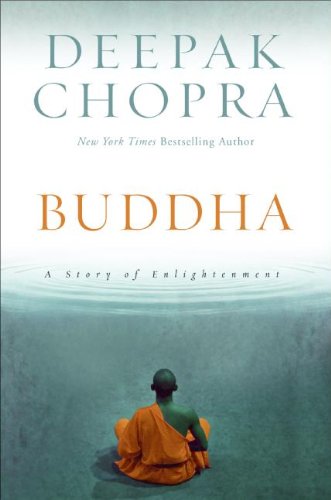
Deepak Chopra brings the Buddha back to life in this gripping New York Times bestselling novel about the young prince who abandoned his inheritance to discover his true calling. This iconic journey changed the world forever, and the truths revealed continue to influence every corner of the globe today.
A young man in line for the throne is trapped in his father's kingdom and yearns for the outside world. Betrayed by those closest to him, Siddhartha abandons his palace and princely title. Face-to-face with his demons, he becomes a wandering monk and embarks on a spiritual fast that carries him to the brink of death. Ultimately recognizing his inability to conquer his body and mind by sheer will, Siddhartha transcends his physical pain and achieves enlightenment.
Although we recognize Buddha today as an icon of peace and serenity, his life story was a tumultuous and spellbinding affair filled with love and sex, murder and loss, struggle and surrender. From the rocky terrain of the material world to the summit of the spiritual one, Buddha captivates and inspires—ultimately leading us closer to understanding the true nature of life and ourselves.
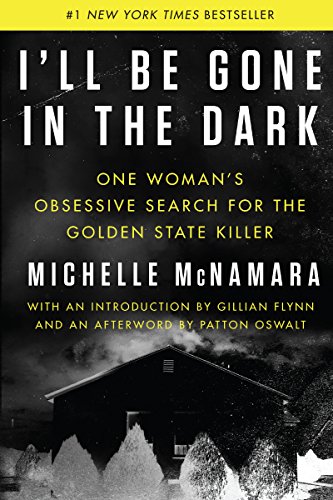
#1 NEW YORK TIMES BESTSELLER • The haunting true story of the elusive serial rapist turned murderer who terrorized California during the 70s and 80s, and of the gifted journalist who died tragically while investigating the case—which was solved in April 2018.
Introduction by Gillian Flynn • Afterword by Patton Oswalt
“A brilliant genre-buster.... Propulsive, can’t-stop-now reading.” —Stephen King
For more than ten years, a mysterious and violent predator committed fifty sexual assaults in Northern California before moving south, where he perpetrated ten sadistic murders. Then he disappeared, eluding capture by multiple police forces and some of the best detectives in the area.
Three decades later, Michelle McNamara, a true crime journalist who created the popular website TrueCrimeDiary.com, was determined to find the violent psychopath she called "the Golden State Killer." Michelle pored over police reports, interviewed victims, and embedded herself in the online communities that were as obsessed with the case as she was.
I’ll Be Gone in the Dark—the masterpiece McNamara was writing at the time of her sudden death—offers an atmospheric snapshot of a moment in American history and a chilling account of a criminal mastermind and the wreckage he left behind. It is also a portrait of a woman’s obsession and her unflagging pursuit of the truth. Utterly original and compelling, it has been hailed as a modern true crime classic—one which fulfilled Michelle's dream: helping unmask the Golden State Killer.
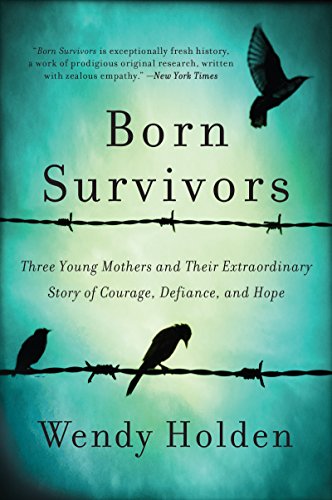
The Nazis murdered their husbands but concentration camp prisoners Priska, Rachel, and Anka would not let evil take their unborn children too—a remarkable true story that will appeal to readers of The Lost and The Nazi Officer’s Wife, Born Survivors celebrates three mothers who defied death to give their children life.
Eastern Europe, 1944: Three women believe they are pregnant, but are torn from their husbands before they can be certain. Rachel is sent to Auschwitz, unaware that her husband has been shot. Priska and her husband travel there together, but are immediately separated. Also at Auschwitz, Anka hopes in vain to be reunited with her husband. With the rest of their families gassed, these young wives are determined to hold on to all they have left—their lives, and those of their unborn babies. Having concealed their condition from infamous Nazi doctor Josef Mengele, they are forced to work and almost starved to death, living in daily fear of their pregnancies being detected by the SS.
In April 1945, as the Allies close in, Priska gives birth. She and her baby, along with Anka, Rachel, and the remaining inmates, are sent to Mauthausen concentration camp on a hellish seventeen-day train journey. Rachel gives birth on the train, and Anka at the camp gates. All believe they will die, but then a miracle occurs. The gas chamber runs out of Zyklon-B, and as the Allied troops near, the SS flee. Against all odds, the three mothers and their newborns survive their treacherous journey to freedom.
On the seventieth anniversary of Mauthausen’s liberation from the Nazis by American soldiers, renowned biographer Wendy Holden recounts this extraordinary story of three children united by their mothers’ unbelievable—yet ultimately successful—fight for survival.

In 2003, software engineer David Miller left his job, family, and friends to fulfill a dream and hike the Appalachian Trail. AWOL on the Appalachian Trail is Miller's account of this thru-hike along the entire 2,172 miles from Georgia to Maine. On page after page, readers are treated to rich descriptions of the valleys and mountains, the isolation and reverie, the inspiration that fueled his quest, and the life-changing moments that can only be experienced when dreams are pursued. While this book abounds with introspection and perseverance, it also provides useful passages about safety and proper gear, with a view into a professional hiker's preparations and tenacity. This is not merely a travel guide, but a beautifully written and highly personal view into one man's adventure and what it means to make a lifelong vision come true.
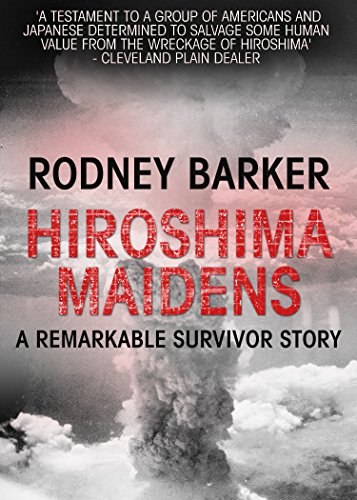
Hiroshima was one of the great tragedies of WWII.
But out of the devastation of the first atomic bomb, some survivors emerged - twenty-five courageous Japanese women who became part of a remarkable humanitarian epic.
Victims of the atomic blast that ushered in the Nuclear Age, these women were brought to the United States in 1955, where they underwent reconstructive surgery to repair the ravages of the bomb.
Schoolgirls when the bomb destroyed their futures, they began to remake their lives and re-create themselves.
This is the compassionate, often bittersweet chronicle of the Hiroshima Maidens.
It follows their lives from the terrifying moments of the detonation of the bomb, through their years as outcasts in their own country, to their not always idyllic stay in America, and on to their lives since — some tragic, some heroic, some affectingly ordinary.
“An illuminating portrait of heroic people...A sobering inspiration for all of us” — Philadelphia Inquirer
“Controlled, fearsome, wonderful, appalling.” — Los Angeles Times
“Evokes a range of human emotions that has been lost in the dead vocabulary of annihilation and deterrence” — The New York Times
Rodney Barker has been an editor, an investigative reporter, and a feature writer for a wide variety of regional and national magazines. In 1979 he was one of three American journalists awarded travel grants to Japan to write about Hiroshima; his resulting reportage, which was published in the Denver Post, reawakened his involvement with the Hiroshima Maidens, two of whom had stayed with his family when he was a child.
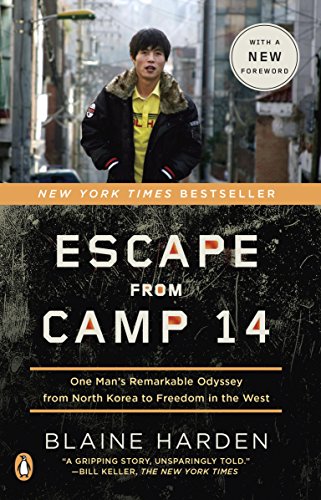
The heartwrenching New York Times bestseller about the only known person born inside a North Korean prison camp to have escaped. Blaine Harden's latest book, King of Spies, will be available from Viking in Fall 2017.
North Korea’s political prison camps have existed twice as long as Stalin’s Soviet gulags and twelve times as long as the Nazi concentration camps. No one born and raised in these camps is known to have escaped. No one, that is, except Shin Dong-hyuk.
In Escape From Camp 14, Blaine Harden unlocks the secrets of the world’s most repressive totalitarian state through the story of Shin’s shocking imprisonment and his astounding getaway. Shin knew nothing of civilized existence—he saw his mother as a competitor for food, guards raised him to be a snitch, and he witnessed the execution of his mother and brother.
The late “Dear Leader” Kim Jong Il was recognized throughout the world, but his country remains sealed as his third son and chosen heir, Kim Jong Eun, consolidates power. Few foreigners are allowed in, and few North Koreans are able to leave. North Korea is hungry, bankrupt, and armed with nuclear weapons. It is also a human rights catastrophe. Between 150,000 and 200,000 people work as slaves in its political prison camps. These camps are clearly visible in satellite photographs, yet North Korea’s government denies they exist.
Harden’s harrowing narrative exposes this hidden dystopia, focusing on an extraordinary young man who came of age inside the highest security prison in the highest security state. Escape from Camp 14 offers an unequalled inside account of one of the world’s darkest nations. It is a tale of endurance and courage, survival and hope.
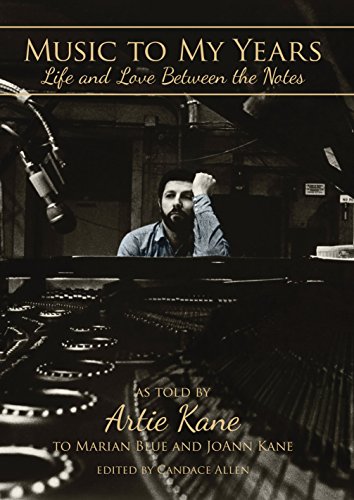
From radio to scores of TV and movie soundtracks, Artie Kane’s music has touched and inspired millions of people.
In his newly released memoir, "Music To My Years: Life and Love Between the Notes," he captures the romantic as well as the unrelenting perfectionism demanded in the entertainment industry. Mr. Kane conducted scores for over 60 motion pictures, wrote music for over 250 television shows ("Wonder Woman," "Vegas," "Loveboat," "Hotel," "Dynasty," "Matlock," "Question of Guilt," "Man Against the Mob") and seven motion pictures, such as "Looking for Mr. Goodbar," "Eyes of Laura Mars," "Night of the Juggler," and "Wrong Is Right."
Artie Kane, with candor and acerbic wit, recounts his quest to find love through eight marriages as he pursued his dreams as a pianist. His memoir is infused with provocative and poignant stories about the celebrities he worked with and gives an insider's look at Hollywood culture, films, and TV shows of the last five decades. "Music to My Years" captures the romantic as well as the rough-hewn and unrelentingly perfectionist sides of the world of professional entertainment. For the love of music, and in quest of love through eight marriages, Artie reimagines his dreams, and with characteristic candor and acerbic wit, proves that the American landscape thrives as a place for misfits who follow their dreams to success.
"Music to My Years" is also the story of the ever-changing world of professional entertainment, told by an artist whose talents helped to define the transformative era. This memoir will delight and inform lovers of music, fans of Hollywood culture and films, and devotees of TV shows of the last five decades. This story will resonate with anyone who has pursued a dream or struggled to find true love.
Have you ever wanted More?
Not more stuff . . . or success . . . or fame . . . but more intimacy, more connection, more mystery, more awe. When Mariah McKenzie finds her husband and best friend in bed together, she is launched on a forbidding and transcendent journey.
Reeling from a life turned upside down, Mariah and her husband, Jake, resolve to search together for a deeper connection--for more. They decide to participate in Margot Anand's Year-Long Love and Ecstasy (aka "Tantra") Training. As they delve into sacred sexuality together, they learn sex is a doorway not only to physical and emotional intimacy, but also to the divine mystery of life. Mariah glimpses a different reality, which includes wildly mystical moments replete with astounding visions and prophetic dreams. The awakening, however, also releases repressed memories of childhood trauma. As Jake helps her navigate these experiences, they open more fully to one another and rekindle their trust.
Mariah begins to see life from a deeper perspective. Mariah's inner journey becomes a kind of striptease, at first exposing fear, anxiety and victim identity, but ultimately revealing a woman, who revels in saying, "yes" to Life with its sacred as well as profane moments.
More is a love story, a healing story, a spiritual adventure.

Originally published in 1906, the book captures Eager’s years as governess to the four daughters of the Emperor and Empress Nicholas II and Alexandra Feodorovna: the Grand Duchesses Olga, Tatiana, Maria, and Anastasia. All of whom would be executed during the Russian civil war just over a decade later.
This first-person account provides a fascinating insight into what was everyday life for the Romanov family. From religious celebrations and family illness to assassination attempts and life during the war; Eager’s central role gained her access to some of the family’s most precious and testing times.
In addition to documenting the time spent with her royal employers, Eager also reveals intriguing aspects of Russian society as whole. Through a series of anecdotal references she includes recollections of her time in Russia regarding such things as the tough life of the peasantry, criminal activity and even the national post service.
This classic, written from the unsuspecting eyes of a foreign nanny, shows early twentieth century Russia and the last Russian royal family like you’ve never seen before.
Margaret Eager (1863-1936) left the Russia in 1904 and returned to Ireland where she received a pension from the Russian government for her time as a nurse. She kept in contact with the family she had known so well right up to their brutal deaths in 1918. Eager’s family stated that she never fully recovered from the news.
Albion Press is an imprint of Endeavour Press, the UK's leading independent digital publisher. For more information on our titles please sign up to our newsletter at www.endeavourpress.com. Each week you will receive updates on free and discounted ebooks. Follow us on Twitter: @EndeavourPress and on Facebook via http://on.fb.me/1HweQV7. We are always interested in hearing from our readers. Endeavour Press believes that the future is now.

During the Civil War, many soldiers on both sides kept diaries of their daily experiences, but very few of these encompassed the entire four years of conflict. This diary of Alexander Hunter, first published in 1905, is a notable exception. Drawing on notes he made during service, Hunter’s account provides a profoundly honest and memorable narrative of the incidents of camp life.
A soldier in Lee’s army from 1861 to 1865, Hunter recounts in splendid detail his extraordinary experiences from the outbreak of hostilities to the final surrender at Appomattox. Here are his dramatic, first-hand accounts of the fighting at Bull Run, Seven Pines, Second Manassas, Sharpsburg, Fredericksburg, Chancellorsville, Gettysburg, and the Wilderness. Describing the early exchanges of prisoners in the war and the aloof yet mutual respect which existed between soldiers of the Union and the Confederacy, Johnny Reb and Billy Yank provides a thrilling and thorough narrative of this pivotal period.
Also included are Hunter’s vivid recollections of life in the barracks, the hardships of winter quarters, the deadly art of sharpshooting, his capture by the enemy and daring escape, the ordeals of prison camps and hospitals, raiding parties, and many other aspects of the conflict.
Alexander Hunter (1843-1914) was a Confederate soldier and author who served during the American Civil war. Born in Virginia to Lt. Bushrod Washington Hunter and Mary Frances, he grew up on Abingdon plantation, a site which is now D.C. National (Ronald Reagan) airport. He is also the author of The huntsman in the South and The women of the debatable land.
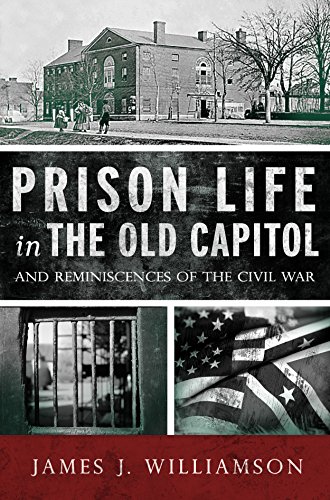
"It is not my intention in my prison diary to discuss the constitutional or legal question of arbitrary arrests and imprisonment of non-combatants, but to present to my readers a picture of the daily routine of prison life as I saw it, together with incidents related to me by fellow-prisoners..."
Originally published in 1911, James J. Williamson's Prison Life in the Old Capitol tracks his time served as a prisoner in the Old Capitol Prison in Washington D.C during the time of the American Civil War. Throughout this memoir, Williamson presents a true picture of the daily life and routine observed by those in the prison as William himself saw it. William’s diary of prison life is given added scope through his appended facts concerning the treatment of prisoners of war during the period, claiming that in giving a frank and honest account prejudice and hostile feeling may be overcome and a reunion may be achieved by ‘all those who have the peace and prosperity of the country at heart’. Were these the true intentions of the memoir? Or did Williamson pen the work as a propagandist celebration of the Confederate lives lost and a damnation of the North’s actions following their victory? Read on, and decide for yourself…
James J. Williamson was one of Mosby's Rangers in the Confederate Army during the American Civil War, who was arrested and imprisoned for a stint in Old Capitol prison. His other works include the often studied part-Confederate memoir, part-biography of the 43rd Battalion Virginia Cavalry, Mosby’s Rangers.
Albion Press is an imprint of Endeavour Press, the UK's leading independent digital publisher. For more information on our titles please sign up to our newsletter at www.endeavourpress.com. Each week you will receive updates on free and discounted ebooks. Follow us on Twitter: @EndeavourPress and on Facebook via http://on.fb.me/1HweQV7. We are always interested in hearing from our readers. Endeavour Press believes that the future is now.
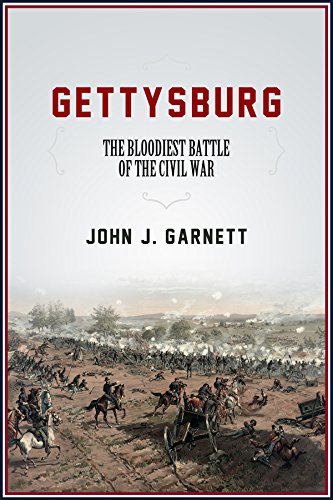
Between 1st and 3rd of July, 1863, over 175,000 men raged into battle in the bloodiest conflict of the entire war. Over 46,000 of them men were killed, captured, wounded or missing.
General Robert Lee was a top graduate from the United States Military Academy and the son of an Officer. He was known for winning most of his battles and he led the confederate forces in to the Pennsylvania town of Gettysburg. His aim was to penetrate the northern states to try and win the war.
General Meade fronted the Army of the Potomac, supporting the Union defence, and the small town of Gettysburg became the battle ground for the future of the USA.
Written by John J. Garnett, one of the soldiers serving for General Lee in the Confederate army, this is a descriptive and personal view of one the of most important battles in the American Civil War.
‘Their only thought was victory, and it inspired them with a valor that was almost superhuman, and, as they saw the enemy slowly waver before their terrific onset, the famed rebel yell went up in a mighty paean of triumph above the thunder of musketry and artillery, which seemed to make the very air tremble with its burden of sound.’
This first hand memoir of the historic Battle of Gettysburg is an insightful and sobering story of the hundreds of thousands of men who marched bravely in to battle that forged the United States of America.
John James Garnett was born on March 30, 1839 in Virginia and was the son of Colonel Henry Thomas Garnett and Eliza Stuart Bankhead. Garnett was scheduled to graduate from West Point with the class of 1861, but resigned to join the Confederacy. Joining the famous New Orleans unit, the Washington Artillery, he was made a lieutenant. He was in charge of the Confederate artillery at the Battle of Gettysburg. Garnett committed suicide on September 10, 1902 in New York City.
Albion Press is an imprint of Endeavour Press, the UK's leading independent digital publisher. For more information on our titles please sign up to our newsletter at www.endeavourpress.com. Each week you will receive updates on free and discounted ebooks. Follow us on Twitter: @EndeavourPress and on Facebook via http://on.fb.me/1HweQV7. We are always interested in hearing from our readers. Endeavour Press believes that the future is now.

Although opposed to secession, in 1861, shortly after Virginia broke away from the Union, Blackford nevertheless enlisted in the First Regiment of Virginia Cavalry.
A Civil Engineer by profession, by war’s end Blackford had risen from a Lieutenant of Cavalry to Lieutenant Colonel of Engineers.
His skills were valuable in both of these branches of the army, and as a result War Years is unusually filled with the day-to-day accomplishments of the Engineer Troops.
From Jeb Stuart’s side, Blackford observed nearly all the operations of mounted troops from June, 1861, to the end of January, 1864, when he was transferred to other responsibilities.
Brought into contact with a number of legendary figures, in April, 1865, Blackford was at Appomattox when General Lee surrendered.
Alongside descriptions of battles, raids and sieges are the stories of army life — little details and incidents that walk hand-in-hand with soldiering — in a thrilling yet eye-opening memoir of the American Civil War.
Lieut.-Colonel William Willis Blackford (1831-1905) was an officer in the Confederate States Army during the Civil War. It was his mother who encouraged him to write down his experiences while they were still fresh in his mind, and War Years with Jeb Stuart was the result.
Albion Press is an imprint of Endeavour Press, the UK's leading independent digital publisher. For more information on our titles please sign up to our newsletter at www.endeavourpress.com. Each week you will receive updates on free and discounted ebooks. Follow us on Twitter: @EndeavourPress and on Facebook via http://on.fb.me/1HweQV7. We are always interested in hearing from our readers. Endeavour Press believes that the future is now.

"Every experience God gives us . . . is the perfect preparation for the future only He can see."--Corrie ten Boom
Corrie ten Boom was a Dutch watchmaker who became a heroine of the Resistance, a survivor of Hitler's concentration camps, and one of the most remarkable evangelists of the twentieth century. In World War II she and her family risked their lives to help Jews and underground workers escape from the Nazis, and for their work they were tested in the infamous Nazi death camps. Only Corrie among her family survived to tell the story of how faith ultimately triumphs over evil.
Here is the riveting account of how Corrie and her family were able to save many of God's chosen people. For 35 years millions have seen that there is no pit so deep that God's love is not deeper still. Now The Hiding Place, repackaged for a new generation of readers, continues to declare that God's love will overcome, heal, and restore.
"A groundbreaking book that shines a clear light on one of the darkest moments of history."--Philip Yancey, author, The Jesus I Never Knew
"Ten Boom's classic is even more relevant to the present hour than at the time of its writing. We . . . need to be inspired afresh by the courage manifested by her family."--Jack W. Hayford, president, International Foursquare Church; chancellor, The King's College and Seminary
"The Hiding Place is a classic that begs revisiting. Corrie ten Boom lived the deeper life with God. Her gripping story of love in action will challenge and inspire you!"--Joyce Meyer, best-selling author and Bible teacher
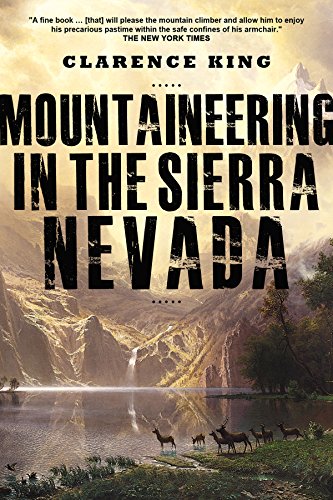
Clarence King was an internationally renowned explorer, famous for exposing a great diamond hoax.
He was a great pioneer and highly regarded in his time.
This tale from his younger years gives some insight into the mind of this controversial figure in American history.
In his own words, hear how this troubled man and his team mapped the treacherous Sierra mountains.
Rather than a dry account of pure events, the text is imbibed with a sense of wonder and adventure.
The writing is beautiful and compelling: over an over, King finds beauty in the worst conditions.
King comes across as likeable and optimistic, which makes the perils and dangers that he undergoes seem all the more important and questions the assumptions we might have about his life.
Ascending and descending mountains, fighting wind and hail and snow, surviving terrifying storms, King was an extraordinary man.
He led a life that was radical and challenging but which has captivated the minds of historians for many years.
In this book is an incredible journey - one of great personal risk but which reveals the richness of the early American landscape.
King was a young man at the time, mapping a young America, but at times he seems to step out of his own time and address the reader, asking us to question our perceptions.
His youthful optimism is contagious and his work helps us to make more sense of the life of Clarence King.
This autobiographical account is an instant classic – beautifully written – that weaves past and present together.
"Scientifically accurate as well as charmingly descriptive of the region." James D. Hart, The Oxford Companion to American Literature
"A fine book . . . [that] will please the mountain climber and allow him to enjoy his precarious pastime within the safe confines of his armchair." New York Times
Clarence King (1842-1901) was an American geologist, mountaineer, and author. He served as the first director of the United States Geological Survey from 1879 to 1881. King was noted for his exploration of the Sierra Nevada.
Albion Press is an imprint of Endeavour Press, the UK's leading independent digital publisher. For more information on our titles please sign up to our newsletter at www.endeavourpress.com. Each week you will receive updates on free and discounted ebooks. Follow us on Twitter: @EndeavourPress and on Facebook via http://on.fb.me/1HweQV7. We are always interested in hearing from our readers. Endeavour Press believes that the future is now.

Kimberly Rae Miller is an immaculately put-together woman with a great career, a loving boyfriend, and a beautifully tidy apartment in Brooklyn. You would never guess that behind the closed doors of her family’s idyllic Long Island house hid teetering stacks of aging newspaper, broken computers, and boxes upon boxes of unused junk festering in every room—the product of her father’s painful and unending struggle with hoarding.
In this dazzling memoir, Miller brings to life her experience growing up in a rat-infested home, hiding her father’s shameful secret from friends for years, and the emotional burden that ultimately led to her suicide attempt. In beautiful prose, Miller sheds light on her complicated yet loving relationship with her parents, which has thrived in spite of the odds.
Coming Clean is a story about recognizing where you come from and understanding the relationships that define you. It is also a powerful story of recovery and redemption.

In 1905 the Ottoman Empire’s rule in its chief province, greater Syria, was drawing precariously towards its close.
Remaining unfazed by hardship or convention, Gertrude Bell, the daughter of an industrialist and land owner, set off on her journey across the region’s interior.
During the months that followed, Bell grew to understand and respect the Arab peoples to a degree that few ever have, travelling further than any western woman before her.
Although in a place with gender roles so clearly defined, Bell was welcomed at the coffee hearth, like a male guest, able to engage with them on the matters that interested her most.
The Desert and the Sown is an account of those people Bell met or that accompanied her, showing what the world in which they lived was like and how it appeared to them, bringing to life the desert landscape and culture for a western world fascinated by the Orient.
Gertrude Bell (1868-1926) was an English writer, traveller, archaeologist, and political officer. In her lifetime she explored Syria, Palestine, Mesopotamia, and Persia. A contemporary of T. E. Lawrence, she worked for the Arab Bureau in Cairo during the First World War and became influential in British Imperial policy making, helping establish the Hashemite dynasties. To this day she is still remembered in Iraq.
